


In the dynamic and highly competitive real estate market, establishing a robust online presence is paramount for success. With a significant majority of prospective homebuyers initiating their search online, mastering SEO for real estate is no longer optional but a critical necessity. This strategic approach ensures your property listings and services are visible to individuals actively seeking them, driving valuable organic traffic to your website.
By effectively optimizing your digital content for search engines, real estate professionals can enhance their local search rankings, attract qualified leads, and ultimately boost their conversion rates. This guide provides a comprehensive framework to navigate the intricacies of real estate SEO, positioning you to outrank competitors and secure more business in 2026.
Chapter 1: Understanding SEO for Real Estate
What is Real Estate SEO?
Real estate SEO is the process of optimizing your online content to rank higher in organic search engine results for keywords and phrases related to your business.
Unlike paid advertising, which offers immediate but temporary visibility, SEO for real estate is an inbound marketing strategy that focuses on attracting your target market to you.
This means that instead of you searching for clients, they find you when they are actively looking for real estate services.
Why is SEO Crucial for Your Real Estate Business?
The importance of SEO for your real estate business cannot be overstated. Consider these compelling reasons:
- The vast majority of homebuyers start their search online. Around 99% of homebuyers between the ages of 23 and 56 use the internet in their home-buying process. If your website doesn’t appear on the first page of search results, you are invisible to a huge portion of your potential clients.
- SEO is cost-effective. Compared to traditional marketing methods and paid online advertising like Google Ads, SEO for real estate offers a higher return on investment in the long run. While it requires an upfront investment of time and effort, the organic traffic you generate is essentially free.
- SEO builds trust and credibility. A strong SEO for real estate strategy with high-quality content establishes your business as a go-to source of knowledge, which builds trust with your audience. When potential clients see you as an expert, they are more likely to choose you as their agent.
- SEO provides a competitive advantage. By implementing a solid SEO for real estate strategy, you can dominate your competitors in search engine rankings who are not taking the same approach. Since 75% of users never scroll past the first page of search results, being at the top is a significant advantage.
The Four Pillars of Real Estate SEO “SEO for real estate“
To build a successful SEO for real estate strategy, it’s essential to understand its four key components:
- On-Page SEO: This involves optimizing the content and structure of your website to make it more search engine and user-friendly. This includes elements like keywords, title tags, and images.
- Off-Page SEO: These are actions taken outside of your website to improve its authority and ranking. This primarily involves building high-quality backlinks from other reputable websites.
- Technical SEO: This focuses on the technical aspects of your website that affect its performance and crawlability by search engines. This includes site speed, mobile-friendliness, and security.
- Local SEO: For real estate agents, local SEO is paramount. It involves optimizing your online presence to attract more business from relevant local searches.
Chapter 2: Laying the Foundation: Website and Technical SEO

Your website is the cornerstone of your online presence. Before you can attract visitors, you need to ensure your website is technically sound and optimized for search engines.
The Importance of a High-Quality, Optimized Website
One of the most common issues with real estate websites is that they are image-heavy, which can significantly slow down the site.
A slow, poorly designed website will not provide a good user experience, leading to high bounce rates and lower rankings.
Choosing the Right Domain Name
While not a direct ranking factor, your domain name is an important part of your brand. Aim for a name that is easy to remember, relevant to your business, and preferably includes your location or a real estate-related term.
Website Structure for SEO Success
A well-structured website is crucial for both users and search engines. Every page on your website should be logically organized and easy to navigate. A clear hierarchy with internal links helps search engine crawlers understand the relationship between your pages and discover your content more effectively.
Essential On-Page SEO Elements
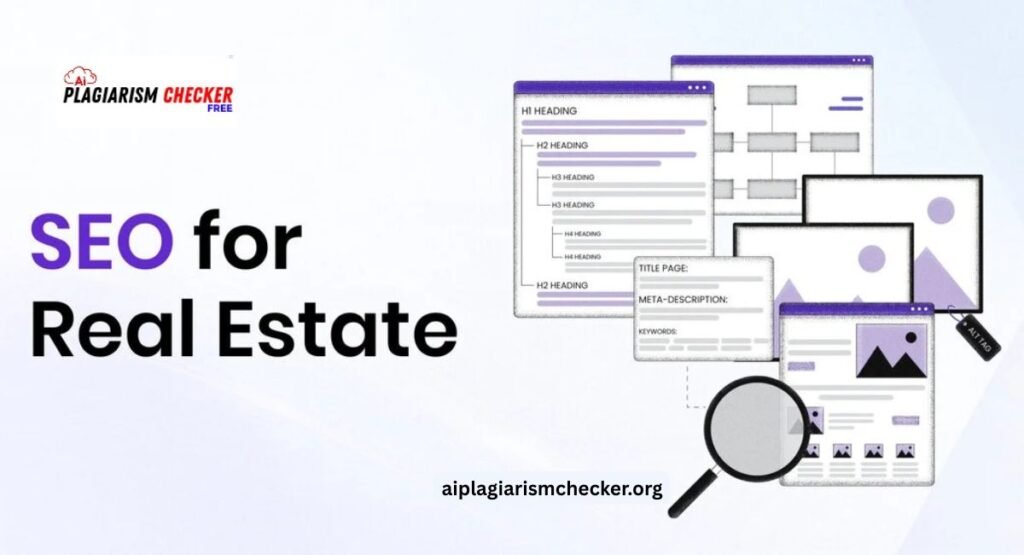
- Title Tags and Meta Descriptions: These are the first things users see in the search results. They should be compelling, include your target keyword, and accurately describe the content of the page.
- Header Tags (H1, H2, H3): Headers help to structure your content and make it easier to read. Your main title should be an H1 tag, with subheadings as H2 and H3 tags.
- Clean and Descriptive URLs: Your URLs should be short, descriptive, and include your target keyword. For example, .
- Image Optimization: Compress your images to reduce their file size without sacrificing quality. Use descriptive file names and alt text that include relevant keywords to help search engines understand the content of your images.
Technical SEO Checklist
- Page Speed and Load Times: A slow website will frustrate users and lead to lower rankings. Use tools like Google’s PageSpeed Insights to test your site’s speed and get recommendations for improvement.
- Mobile-Friendliness (Responsiveness): With a majority of searches now happening on mobile devices, having a mobile-friendly website is essential.
- Site Security (HTTPS): HTTPS encrypts the data between your site and your visitors, which builds trust and is a confirmed ranking signal.
- XML Sitemaps and Indexability: An XML sitemap helps search engines find and index all the pages on your website.
- Fixing Broken Links: Broken links create a poor user experience and can harm your SEO for real estate. Regularly check for and fix any broken links on your site.
Chapter 3: The Heart of SEO for real estate: Keyword Research for Real Estate
Keyword research is the process of finding the words and phrases that people use to search for information online. It is the foundation of a successful SEO for real estate strategy.
Understanding Search Intent in Real Estate
Before you can choose the right keywords, you need to understand the intent behind the search. Are users looking for information, trying to find a specific website, or ready to make a transaction?
For example, someone searching for “how to buy a house” has a different intent than someone searching for “homes for sale in [your city].”
Types of Keywords
- Short-tail keywords are broad search terms, usually one or two words, like “real estate” or “homes for sale.” They have high search volume but are also highly competitive.
- Long-tail keywords are more specific phrases, usually three or more words, like “3-bedroom homes for sale in [your neighborhood] with a backyard.” They have lower search volume but are much less competitive and have a higher conversion rate.
Using Keyword Research Tools
Tools like Google Keyword Planner, SEMrush, and Ahrefs can help you find relevant keywords, analyze their search volume and competition, and discover new keyword ideas.
Finding High-Volume, Low-Competition Keywords
The sweet spot for keyword research is finding keywords with a decent search volume and low competition.
These are the keywords you have the best chance of ranking for, especially when you are just starting out.
The Power of Local and Hyperlocal Keywords
Since real estate is an inherently local business, it is crucial to focus on location-based keywords.
Think about the specific cities, neighborhoods, and even school districts that you serve.
Spying on Your Competitors’ Keywords
Analyze the websites of your top competitors to see what keywords they are ranking for.
This can give you valuable insights into what is working in your market and help you identify new keyword opportunities.
Chapter 4: Content is King: Creating High-Value Real Estate Content
Once you have your keywords, it’s time to create content that will attract and engage your target audience. Your content should be high-quality, informative, and relevant to the needs of your potential clients.
Developing a Content Strategy
Your content strategy should be based on your keyword research and your understanding of your target audience.
Plan out the topics you will cover and create a content calendar to ensure you are consistently publishing new content.
Types of Content That Attract Leads
- Blog Posts and Articles: Create blog posts that answer common questions and provide valuable information to buyers and sellers.
- Neighborhood Guides: In-depth guides to the neighborhoods you serve are a great way to attract local traffic.
- Video Content: Videos are a powerful way to engage your audience and showcase your expertise. Consider creating property tours, neighborhood tours, and informational videos.
- Client Testimonials: Social proof is a powerful motivator. Feature testimonials from satisfied clients on your website and social media channels.
- Market Updates: Provide regular updates on the local real estate market to position yourself as a market expert.
Creating Location-Specific Content
To rank in local search results, you need to create content that is specific to your location. This includes neighborhood guides, blog posts about local events and attractions, and information about local schools and amenities.
Chapter 5: Conquering Local SEO “SEO for real estate“
For real estate agents, local SEO is the most important part of their SEO for real estate strategy. It is what will help you connect with buyers and sellers in your area.
The Importance of a Google Business Profile (GBP)
Your Google Business Profile is a free and powerful tool that can help you rank in local search results. Make sure your profile is complete and optimized with accurate information, high-quality photos, and regular posts.
Optimizing Your GBP
- Complete all sections of your profile: This includes your business name, address, phone number, website, hours, and a detailed description of your services.
- Choose the right categories: Select the categories that best describe your business.
- Upload high-quality photos and videos: Showcase your properties, your team, and your brand.
- Encourage and respond to reviews: Reviews are a major ranking factor and can help you build trust with potential clients.
Local Link Building and Citations
Citations are mentions of your business name, address, and phone number on other websites. They are an important local ranking factor. Make sure your citations are consistent across all platforms.
Chapter 6: Off-Page SEO: Building Authority and Trust
Off-page SEO involves actions taken outside of your website to improve its authority and ranking. The most important part of off-page SEO is link building.
The Power of Backlinks
Backlinks are links from other websites to your website. They are a major ranking factor because they signal to search engines that other websites trust your content.
Strategies for Building High-Quality Backlinks
- Guest Blogging: Write articles for other reputable websites in your industry and include a link back to your website in your author bio.
- Local PR and Media Outreach: Get featured in local news articles, blogs, and online publications.
- Broken Link Building: Find broken links on other websites and offer to replace them with a link to your own relevant content.
Chapter 7: Measuring Success: Tracking and Analytics
To know if your SEO for real estate efforts are paying off, you need to track your results.
Key Performance Indicators (KPIs) to Track
- Organic Traffic: The number of visitors who come to your website from organic search results.
- Keyword Rankings: Your position in the search results for your target keywords.
- Leads and Conversions: The number of people who contact you or fill out a form on your website.
- Bounce Rate: The percentage of visitors who leave your website after viewing only one page.
- Time on Page: The average amount of time that visitors spend on your website.
Using Google Analytics and Google Search Console
Google Analytics and Google Search Console are free tools that can help you track yourSEO for real estate performance.
Chapter 8: The Future of Real Estate SEO: 2026 and Beyond
The world of SEO is constantly changing. To stay ahead of the curve, you need to be aware of the latest trends.
The Rise of AI and Large Language Models (LLMs)
AI and LLMs are changing the way people search for information. To succeed in 2026 and beyond, you will need to optimize your website for these new technologies.
This includes creating structured data that is easy for AI to understand and focusing on creating high-quality, trustworthy content.
Voice Search Optimization
More and more people are using voice search to find information online. To optimize for voice search, you need to focus on creating content that answers questions in a natural, conversational way.
Conclusion
SEO for real estate for real estate is a long-term strategy that requires time, effort, and a commitment to creating high-quality content. However, the rewards are well worth it. By following the steps outlined in this guide, you can improve your search engine rankings, generate more leads, and build a successful real estate business that will thrive in 2026 and beyond.


